
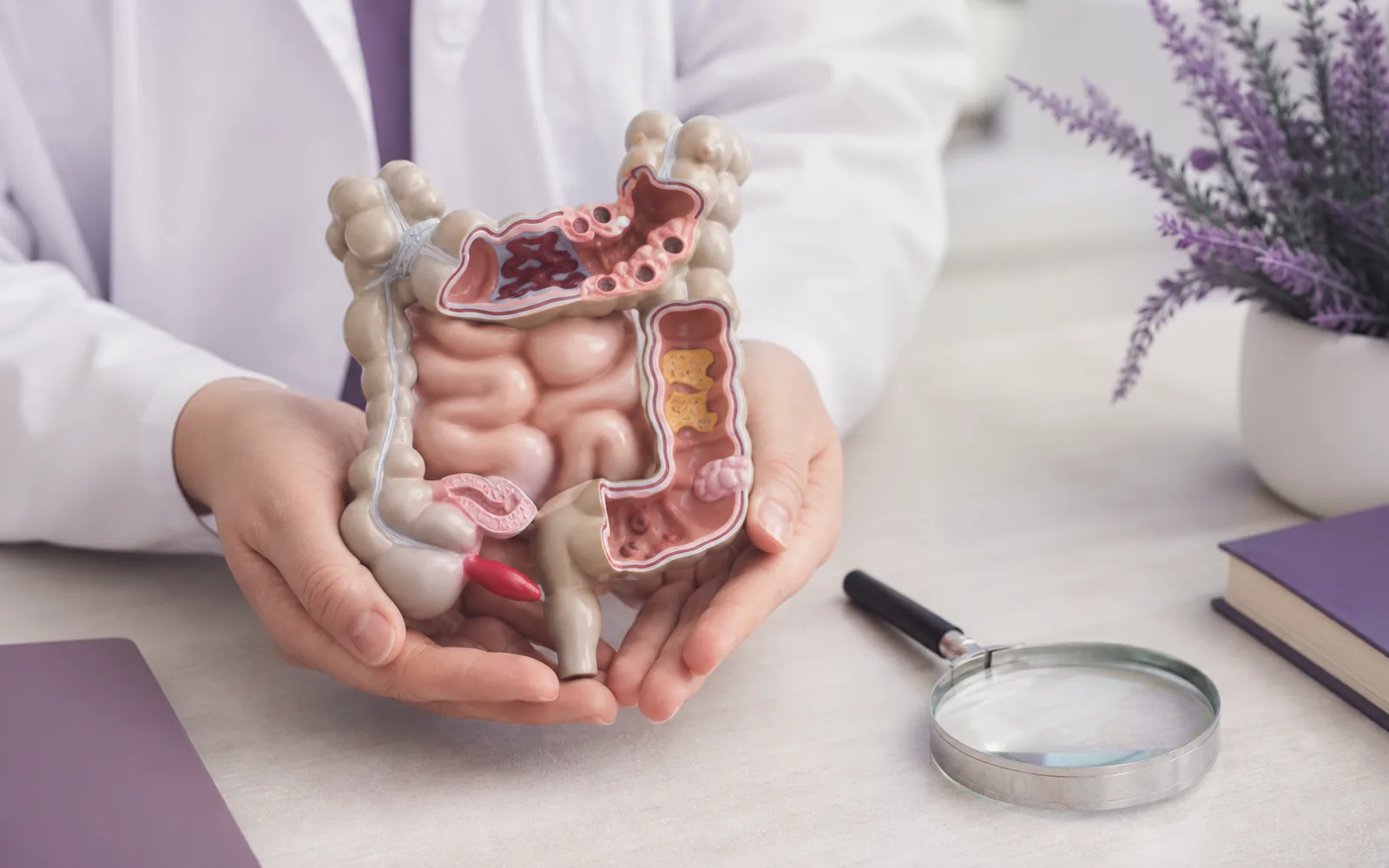
As promised in the previous article about Hidradenitis Suppurativa, today we will explore this question: what is leaky gut? This article reflects my personal research and experience, not medical advice. I am not a doctor, and HS has no definitive cure.
Leaky gut: a scientific definition
Leaky gut, also known as leaky gut syndrome, is a popular term for increased intestinal permeability, a change in how the intestinal barrier regulates the passage of food components, bacteria, fungi, allergens, and other substances. Increased intestinal permeability is studied in medicine, but "leaky gut syndrome" is not universally recognized as a standalone diagnosis.
What does leaky gut syndrome really mean?
What does it mean when people say that the gut "leaks"?
The idea is that, like a tap that is not fully closed, the intestinal barrier may allow substances to enter the bloodstream more readily than it normally would.
This passage is normally tightly regulated by several protective barriers. When those barriers are disrupted, they may be associated with inflammation or disease. In recent years, researchers have investigated changes in intestinal permeability in several conditions, including autoimmune diseases, but this does not mean that leaky gut causes every condition associated with it.
In a healthy gut, the intestinal barrier helps control what remains inside the intestine, what is absorbed, and what is eventually eliminated. With increased intestinal permeability, some substances may cross that barrier more easily.
Leaky gut and health conditions, not only autoimmune diseases
This is where possible symptoms enter the discussion. Some people report digestive problems such as constipation or diarrhea, gas, bloating, abdominal pain, heartburn, or irritable bowel syndrome (IBS). Others report less obvious issues such as migraine or acne. These symptoms are nonspecific and can have many causes, so they should not be assumed to confirm increased intestinal permeability.
Unfortunately, we often ignore the first signs that something may be wrong because symptoms like these are treated as a normal part of life. We may end up self-treating with over-the-counter products or relying only on medication prescribed for the symptoms. That can feel like trying to seal a leaking pipe with tape if the underlying cause has not been identified.
Substances that cross the intestinal barrier can travel through the bloodstream and interact with other systems in the body. Researchers continue to study whether and how this may contribute to symptoms beyond the digestive tract. The picture is complex, and symptoms vary from person to person depending on genetics, lifestyle, health conditions, and many other factors.
In her book "The Hidden Plague", Tara Grant writes that around 70 percent of people with HS experience digestive problems. This is her reported figure rather than a population-wide clinical estimate, but it helped me consider a possible connection between gut health and HS in my own experience.
Leaky gut: symptoms
Below are other symptoms and conditions sometimes discussed in relation to gut health. This list is not exhaustive, and it does not mean that leaky gut causes them. Each symptom should be assessed on its own because many other factors may be involved, whether or not increased intestinal permeability is present.
- Fatigue and joint or muscle pain
- Autoimmune conditions, as well as allergies, hives, skin rashes, and food allergies
- Depression, other mental health conditions, confusion, and memory problems
- Autism, ADHD, and ADD, which have been discussed in gut research but are not symptoms of leaky gut
- Asthma
- Skin problems, including acne, eczema, and psoriasis
- Metabolic conditions such as obesity and diabetes.
To understand what people mean by leaky gut, we also need to talk about the gut microbiota.
Leaky gut and the gut microbiota
The gut microbiota forms part of the intestine's natural protective system and, in a healthy person, includes hundreds of different species of bacteria. Some help break down food and support nutrient absorption, while others can be harmful under certain conditions and may contribute to infection. Older estimates suggested that a healthy gut contains more than 100,000,000,000,000, or 100 trillion, microorganisms and that they outnumber human cells ten to one, although current estimates vary.
In addition to contributing to metabolism, the gut microbiota interacts with the intestinal wall, helps defend against harmful organisms and substances, and supports digestion.
The gut microbiota also helps protect us from infection, and a substantial part of the immune system is located in and around the gut.
Gut dysbiosis: what it is and how it develops
This is where beneficial bacteria come into play, helping to keep potentially harmful microorganisms under control.
When the balance of microorganisms in the gut is disrupted, pathogenic bacteria, viruses, yeasts, or fungi may become more prominent and alter the gut ecosystem. This condition is known as dysbiosis, a term used when the composition or function of the gut microbiota becomes imbalanced. This is one reason some people explore an eating approach such as the AIP protocol , ideally with guidance from a qualified healthcare professional.
Increased intestinal permeability and dysbiosis may occur together, but having one does not automatically mean that you have the other.
Antibiotics: enemies or allies?
In addition to a diet lacking appropriate nutrients, stress, infections, and some prescription medications, including birth control pills, painkillers, steroids, and antibiotics, may affect the composition of the gut microbiota. The effect depends on the medication, dose, duration, and individual.
Those of us living with Hidradenitis Suppurativa have often heard about antibiotics, haven't we?
Studies have shown that antibiotics can cause a rapid and substantial reduction in gut microbial diversity. Recovery varies, and antibiotics can also be important, sometimes essential, treatments when appropriately prescribed.
When antibiotics are prescribed for Hidradenitis Suppurativa, some people may experience temporary improvement, while others may not. Decisions about starting, continuing, or stopping them should always be made with a qualified healthcare professional.
Another key factor in gut health is the intestinal barrier, whose function is essential to understanding what leaky gut means.
The gastrointestinal tract
Before discussing the intestinal barrier, we need to mention the gastrointestinal tract (GI tract), a hollow tube roughly nine meters long that runs from the mouth to the anus. It is lined by a mucous membrane and is home to different microbial communities. Some people with HS also experience mouth ulcers, chronic sore throats or tonsillitis, acid reflux, abdominal cramps, bloating, constipation, or diarrhea, but these symptoms are nonspecific and do not by themselves demonstrate an altered gut microbiota.
One of its most important functions is to allow nutrients to be absorbed and metabolized while limiting the passage of potentially harmful or unwanted substances. The skin also serves as a barrier, although it interacts with the external environment. Researchers are studying the relationship between the gut and skin, but the idea that the skin is simply a "mirror" of the gut is an oversimplification. Acne, boils, and eczema can have many causes, so their presence does not necessarily mean that something is wrong in the gut.
Gatekeeper cells: enterocytes
The intestine also has "gatekeeper" cells. These highly specialized cells, called enterocytes, line the intestine and form an important epithelial layer. This barrier helps regulate the passage and transport of digested nutrients from the intestine into the bloodstream.
Enterocytes also help prevent other substances from the intestine from coming into contact with other systems in the body.
They are one of the body's main defenses against unwanted bacteria, toxins, and proteins. When enterocytes or the connections between them are damaged, microscopic spaces may allow certain unwanted substances to pass through the intestinal barrier more easily.
This may allow substances that would normally remain in the intestine and eventually be eliminated to enter the circulation.
Enterocytes are not the gut's only line of defense. Immune cells around the intestine also help protect us from potentially harmful substances that may cross the epithelial barrier.
Enterocytes and junctions
Thanks to enterocytes, immune cells, and other components of the intestinal barrier, nutrients from digested and absorbable material can normally enter the blood or lymphatic system while other substances are restricted. With increased intestinal permeability, that regulation may be disrupted.
For a long time, scientific understanding of this barrier was more limited, and the connections between enterocytes were sometimes considered relatively fixed and difficult to cross.
Research by Japanese scientists in the mid-1980s helped clarify that structures between enterocytes function somewhat like adjustable fasteners.
Scientists found that enterocytes are connected by tight junctions, protein structures that form a seal between neighboring cells. When this seal is disrupted, the barrier function of the intestinal lining can also be affected.
We have now explored what leaky gut means and why intestinal permeability has been discussed in relation to Hidradenitis Suppurativa. Current evidence does not establish leaky gut as a cause of HS. In the next articles, we will look at the first signs of HS and its different stages.
Reader comments (0)